Cart
Your cart is empty
Add products to get started
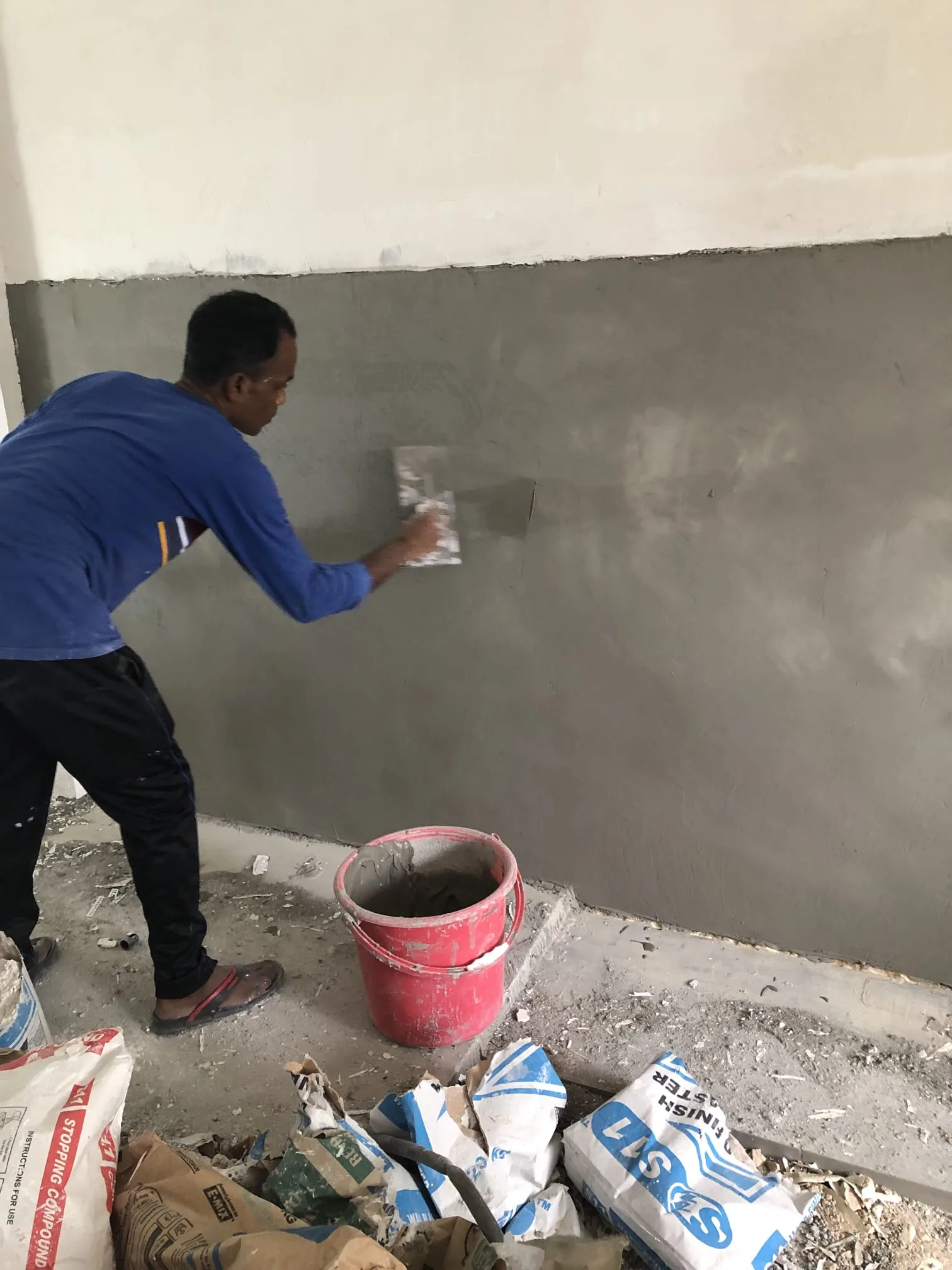
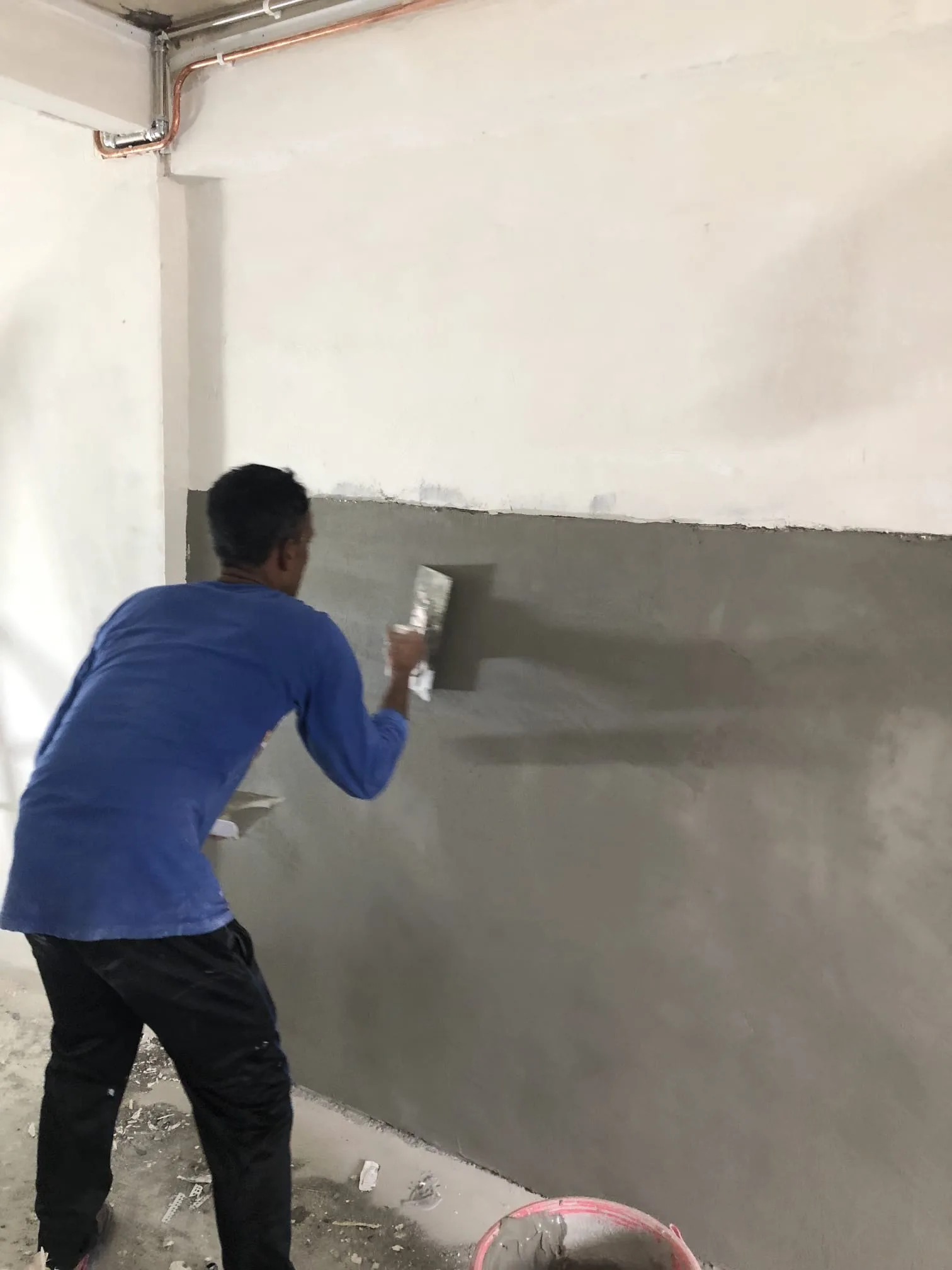
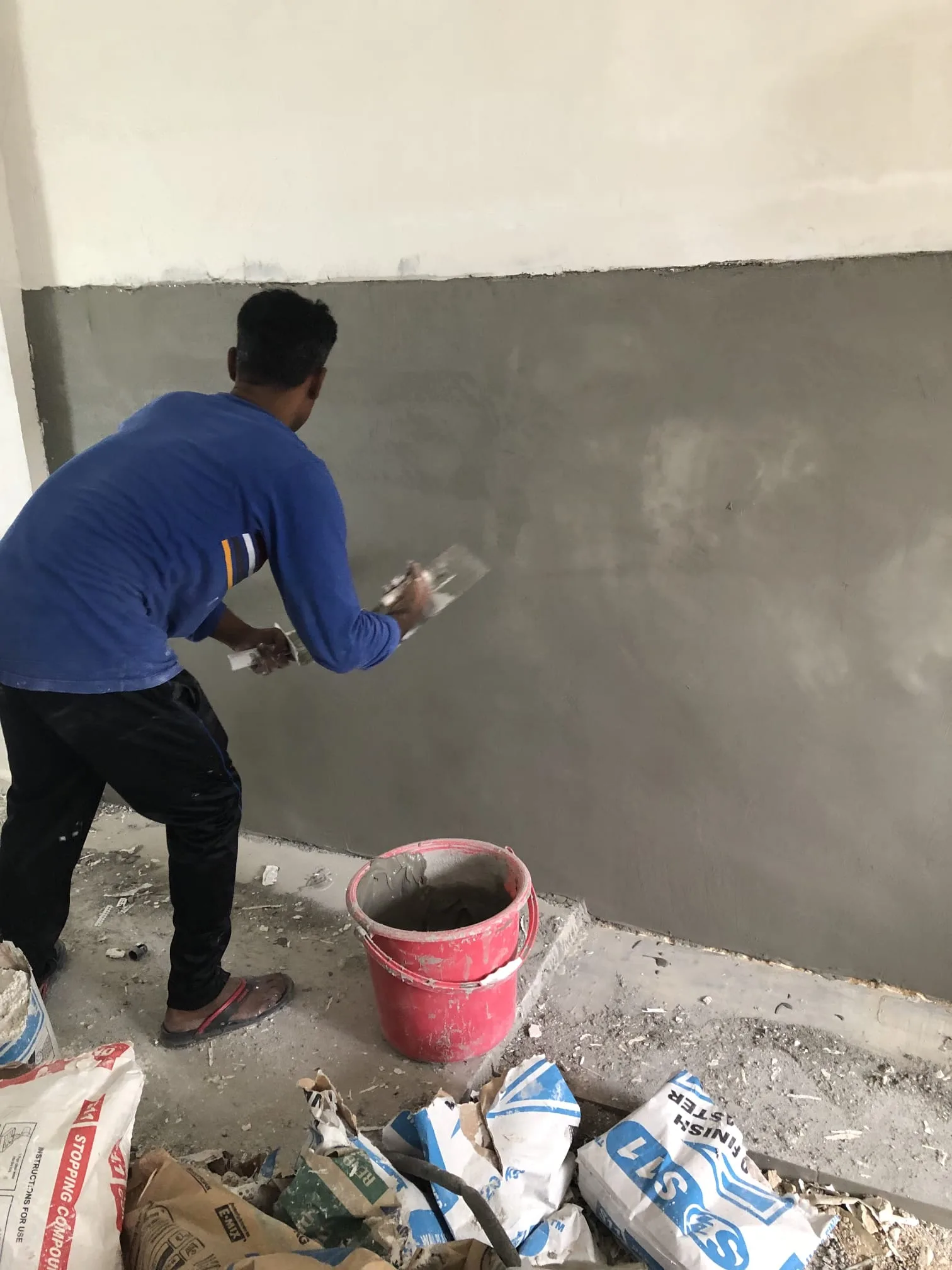
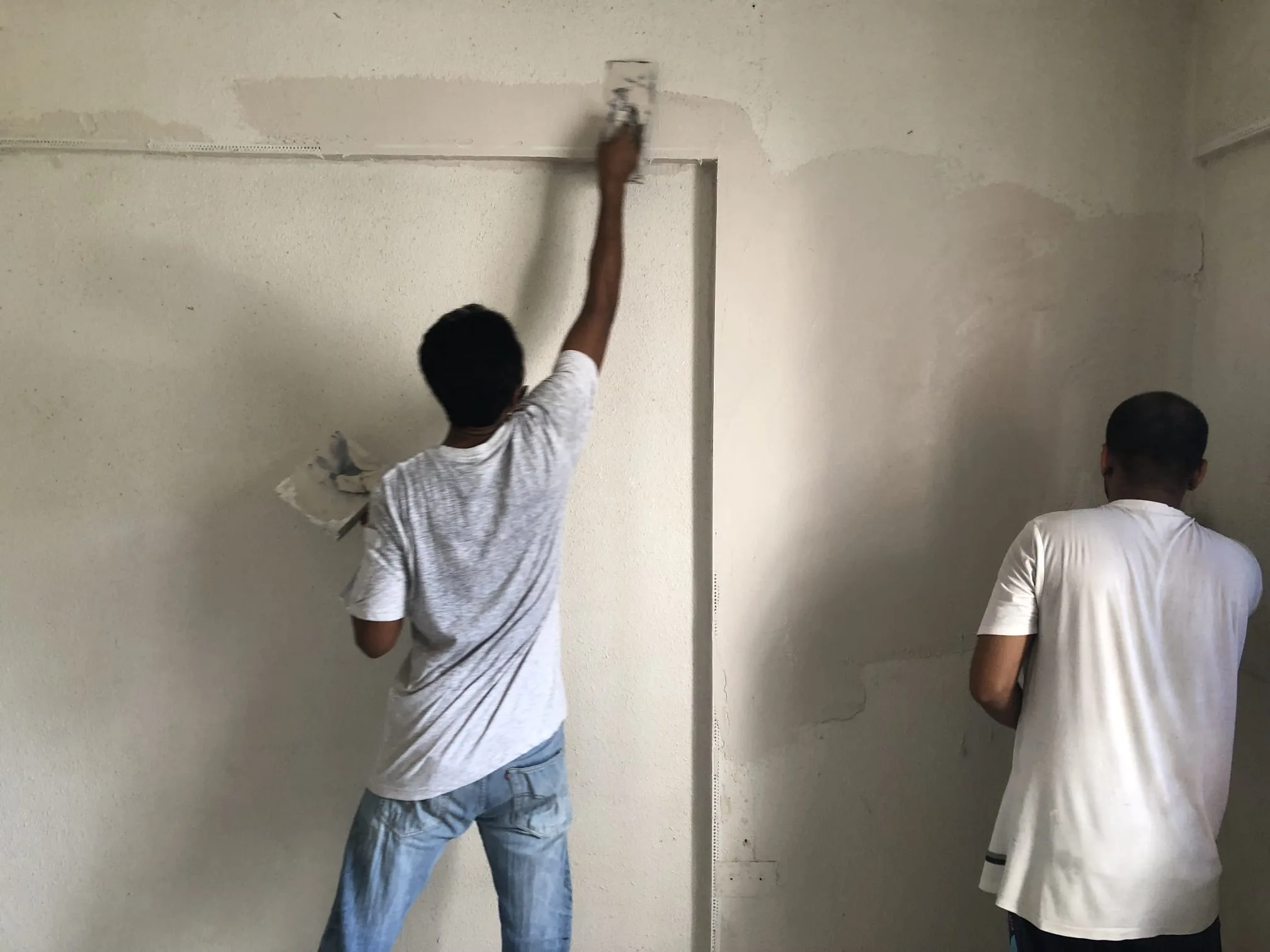
Skim coating, crack repair, patching after hacking and new plaster for walls and ceilings. A smooth, solid surface that is ready for paint.
Paint cannot hide a poor wall. Cracks reappear, patches show as dull spots and uneven surfaces catch the light, especially along corridors and under downlights. A good finish needs a sound, flat base, and that is what proper plaster work provides. MK Renovation handles skim coating to smooth rough or uneven walls, crack and hole repair, patching around new electrical and plumbing points, and making good after hacking or the removal of fixtures. We also plaster new brick and block walls, rebuild chipped corners and edges, and repair flaking or cracked ceiling plaster. Before we repair anything, we look at why the damage happened. A crack from small building movement needs a different repair from plaster that is flaking because of a leaking pipe. Fixing the cause first means the repair lasts and you do not pay for the same job twice. We work in HDB flats, condos, landed homes and offices across Singapore. Floors and furniture are covered before we start, sanding dust is kept under control, and the area is cleaned before we leave. Our plaster team works hand in hand with our painters, so walls go from damaged to finished without waiting for another contractor. One booking covers the repair, the preparation and the final coat of paint.
Tap any item to request a quote for it
Wall skim coat
A thin, even layer of plaster applied over rough, patchy or uneven walls. It gives a smooth surface that makes the new paint look clean and uniform.
Crack repair
Hairline cracks filled with flexible filler, and wider cracks cut out and reinforced with mesh tape. Repairs are built up in layers so they are less likely to return.
Hole and dent patching
Holes from old wall plugs, nails, brackets and knocks filled and sanded flush. Once painted, the repaired spots blend in with the rest of the wall.
Make good after hacking
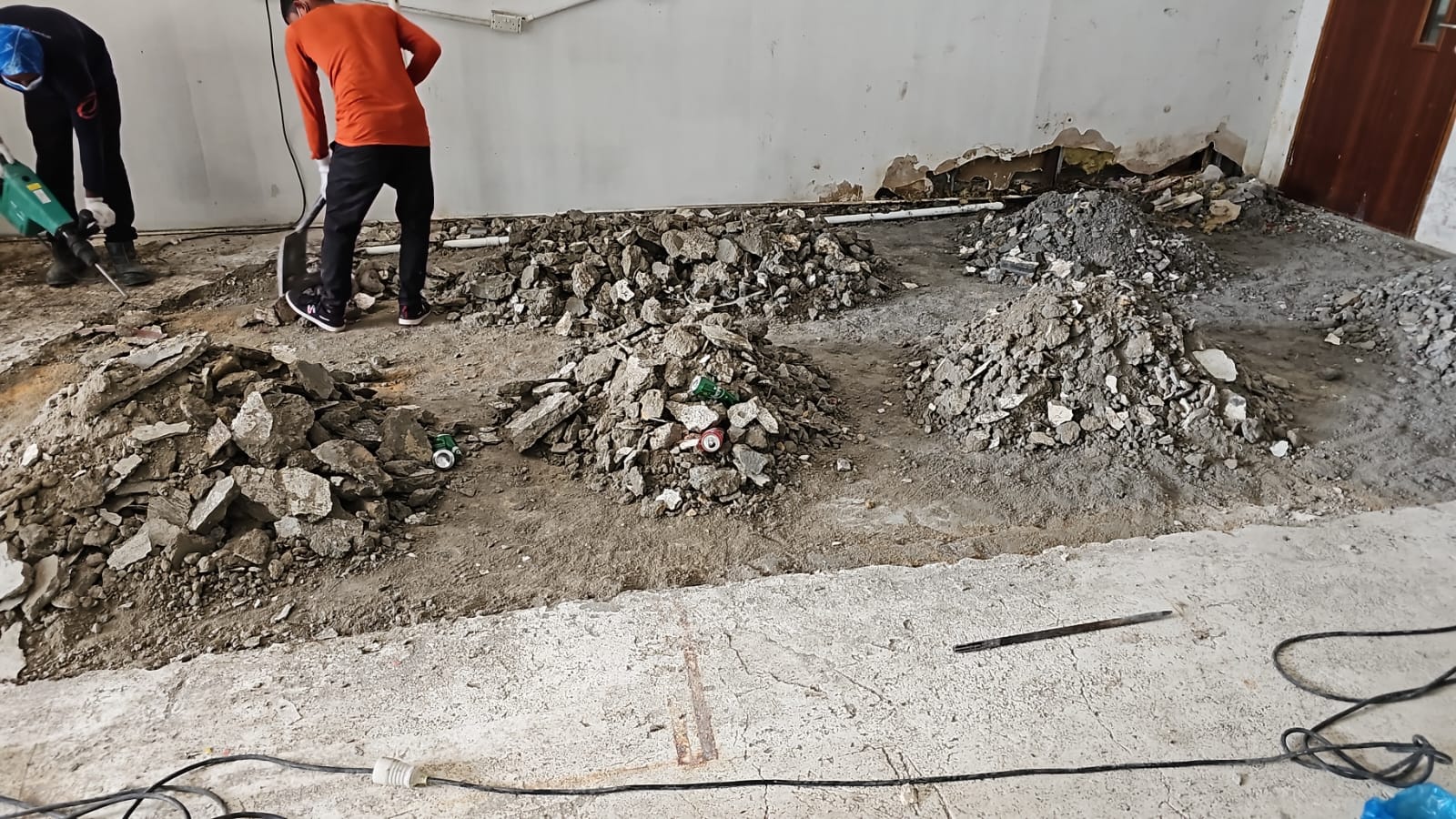
Walls, edges and floors rebuilt after tiles, cabinets or fixtures are removed. We restore a straight, solid surface that is ready for tiling or painting.
Patching around new points
Chases and openings left by new power points, switches or relocated pipes patched neatly. Ideal after electrical or plumbing works so the wall looks untouched.
New wall plastering
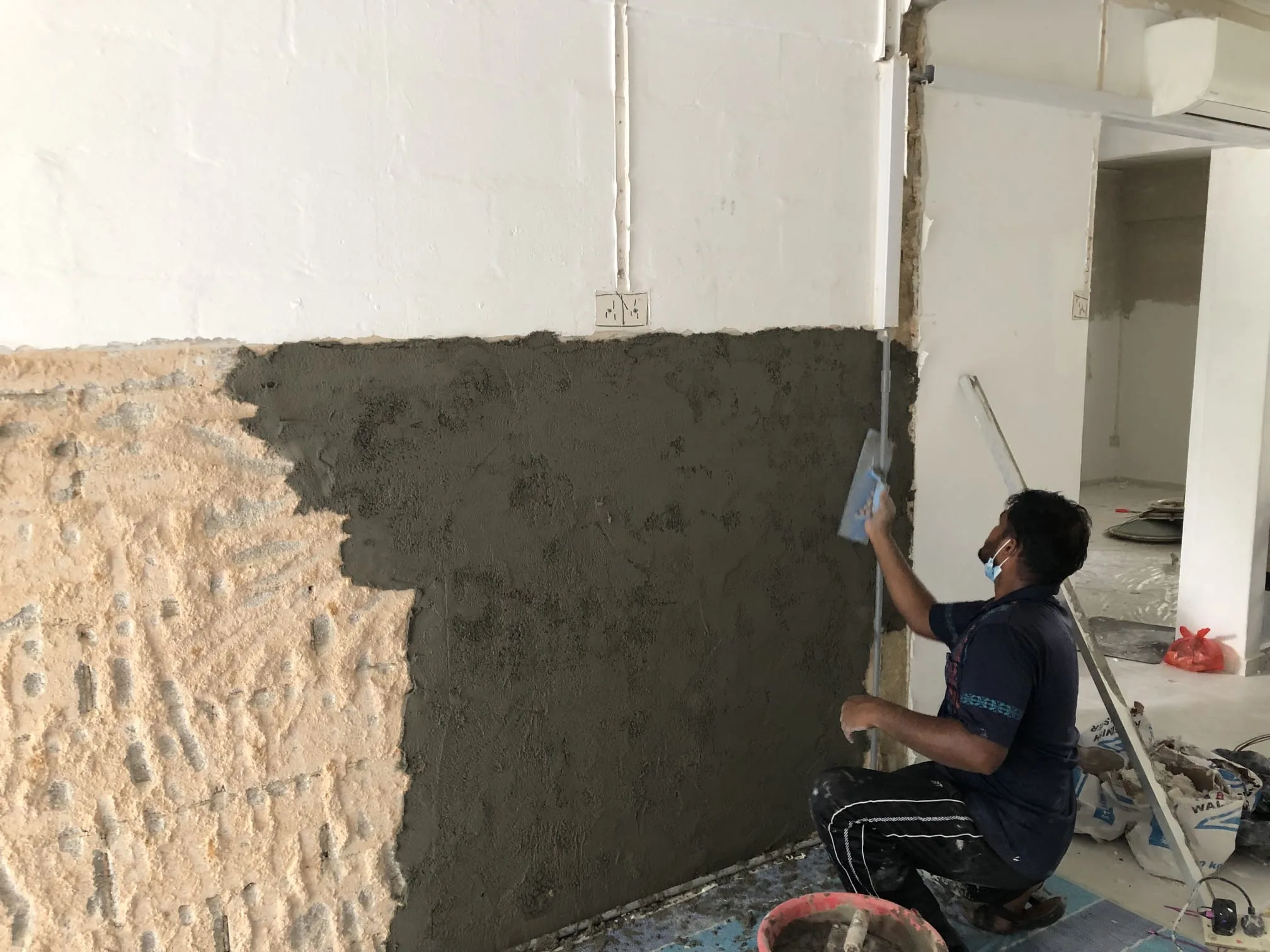
Plastering for new brick or block walls, levelled and finished smooth. The wall is left ready for skim coat, paint or tiles.
Corner and edge repair
Chipped or broken wall corners rebuilt straight and true. Corner beads can be used on busy corners to help protect them from future knocks.
Ceiling plaster repair
Flaking, cracked or water-damaged ceiling plaster removed and repaired. If moisture is the cause, we trace and fix the source before replastering.
The base decides how the finish looks
We look at why a wall cracked or flaked, not only where. Moisture, movement and old plaster each need a different fix, so finding the cause helps the repair last.
Deep holes and wide cracks are filled in stages, with each layer allowed to set. This prevents shrinkage and the fine cracks that appear when thick repairs are rushed.
Repaired surfaces are checked with a straight edge before sanding. A flat wall reflects light evenly, so patches do not show once painted.
Every repair is sanded smooth and wiped free of dust. Sealer is applied where needed so the paint dries to an even colour.
Floors, furniture and fittings are covered while we sand. We clean up as we go so the rest of your home stays usable.
Our painters can follow straight after the repair is ready. You get a finished wall in one booking, without coordinating separate contractors.
Cracks in plaster are common in Singapore homes, from older HDB flats to newer condos. Most are cosmetic, caused by small movements, temperature changes or old plaster drying out over the years. Some point to moisture or a problem behind the wall. Knowing the difference decides the right repair, and it is the first thing we check when we see your wall.
Fine cracks in the paint and plaster surface are usually cosmetic. They often appear above doors and windows or where walls meet ceilings, because these are points where small movements show first. We open the crack slightly so filler can grip, fill it with a flexible filler, sand it flush and seal it before painting. This makes the crack less likely to return compared with simply painting over it. If there are many hairline cracks across a wall, a skim coat may give a better overall result.
Cracks that are wider, run along joints between materials or come back after painting need more than filler. We cut out the loose material, embed reinforcing mesh tape where needed and build the repair up in layers, allowing each layer to set. This gives the repair the strength to handle small movements without splitting again. Cracks along the joint between a wall and a column, or between old and new walls, are typical examples. If the crack is diagonal, growing or suggests a structural issue, we will tell you honestly and recommend getting it assessed by a qualified professional.
Plaster that bubbles, flakes or feels soft usually has moisture behind it. Common sources include a leaking pipe, a failed waterproofing layer in a bathroom next door, or rainwater seeping in from outside. Replastering without fixing the source only hides the problem for a short time. We find and stop the source first, working with our plumbing team where needed. Then we remove the damaged plaster, let the wall dry properly and replaster it so the repair holds.
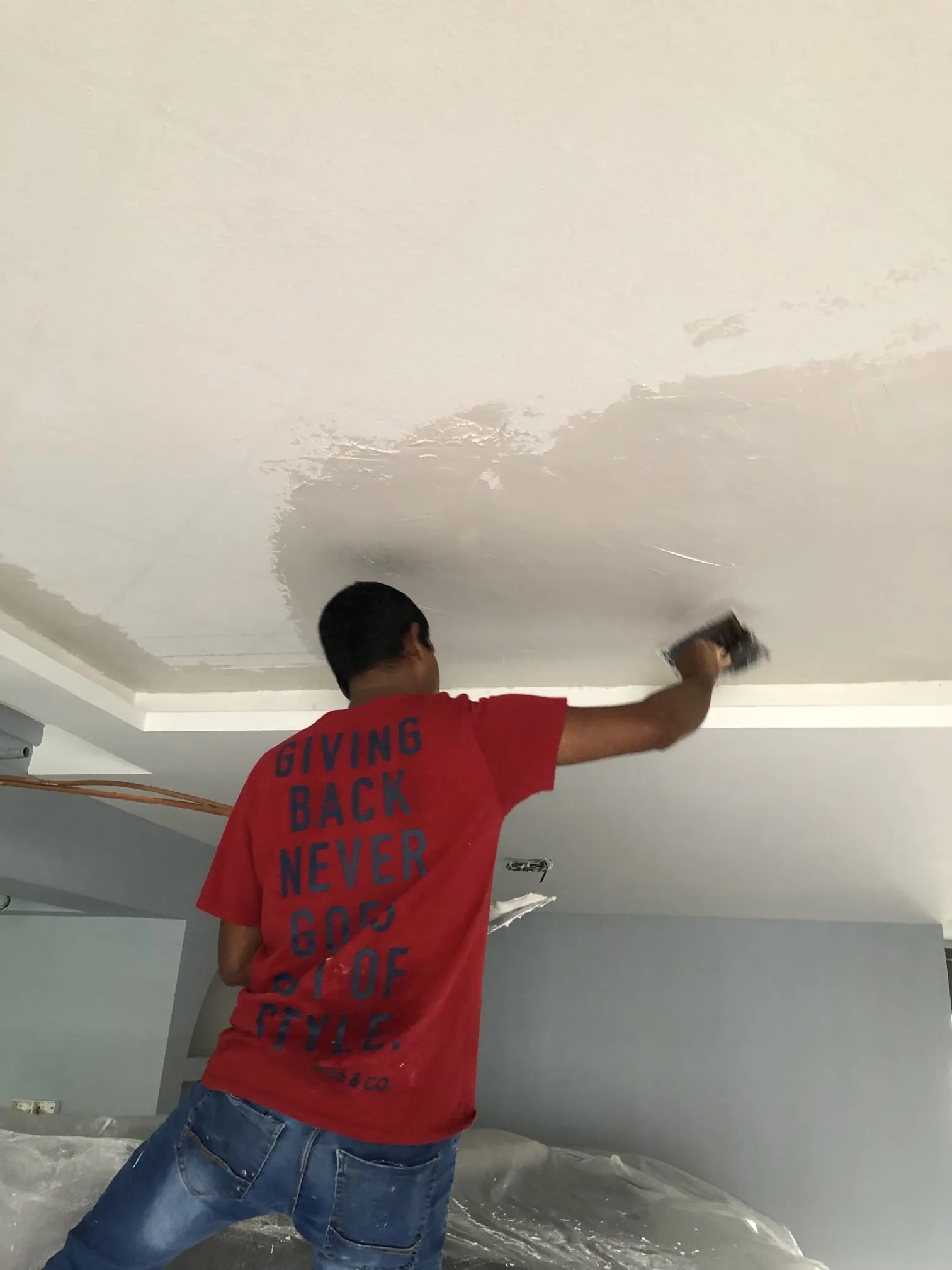
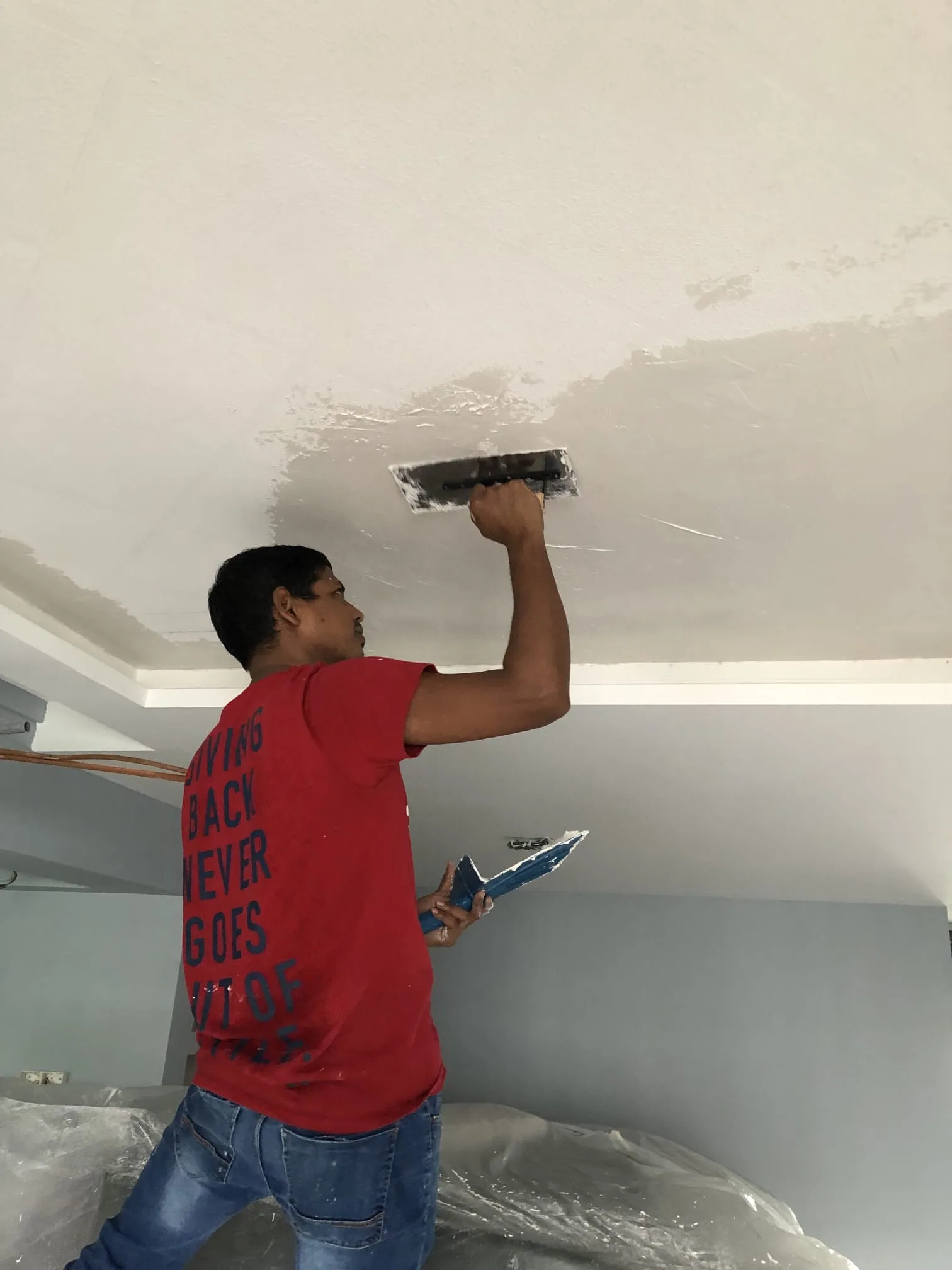
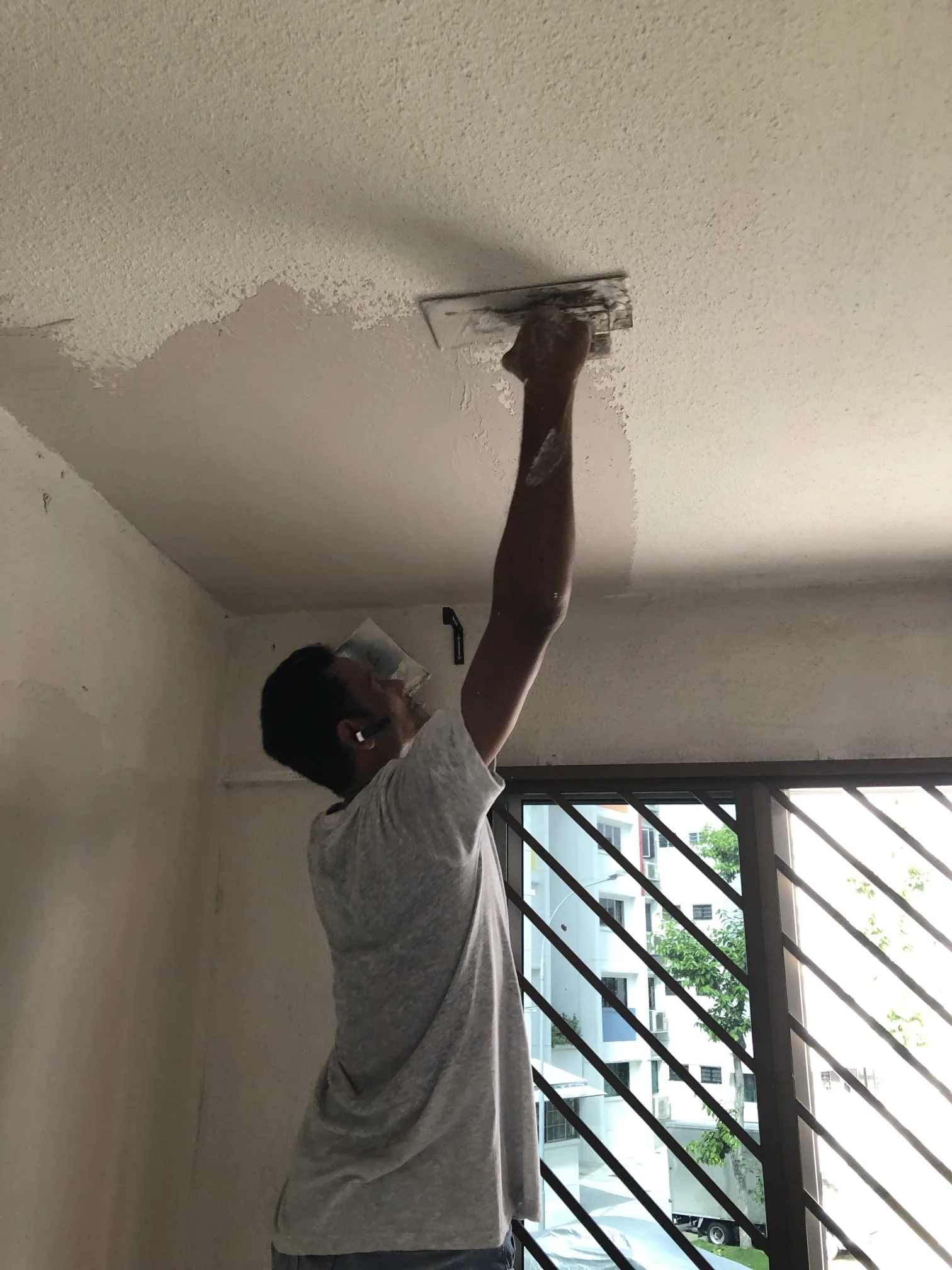
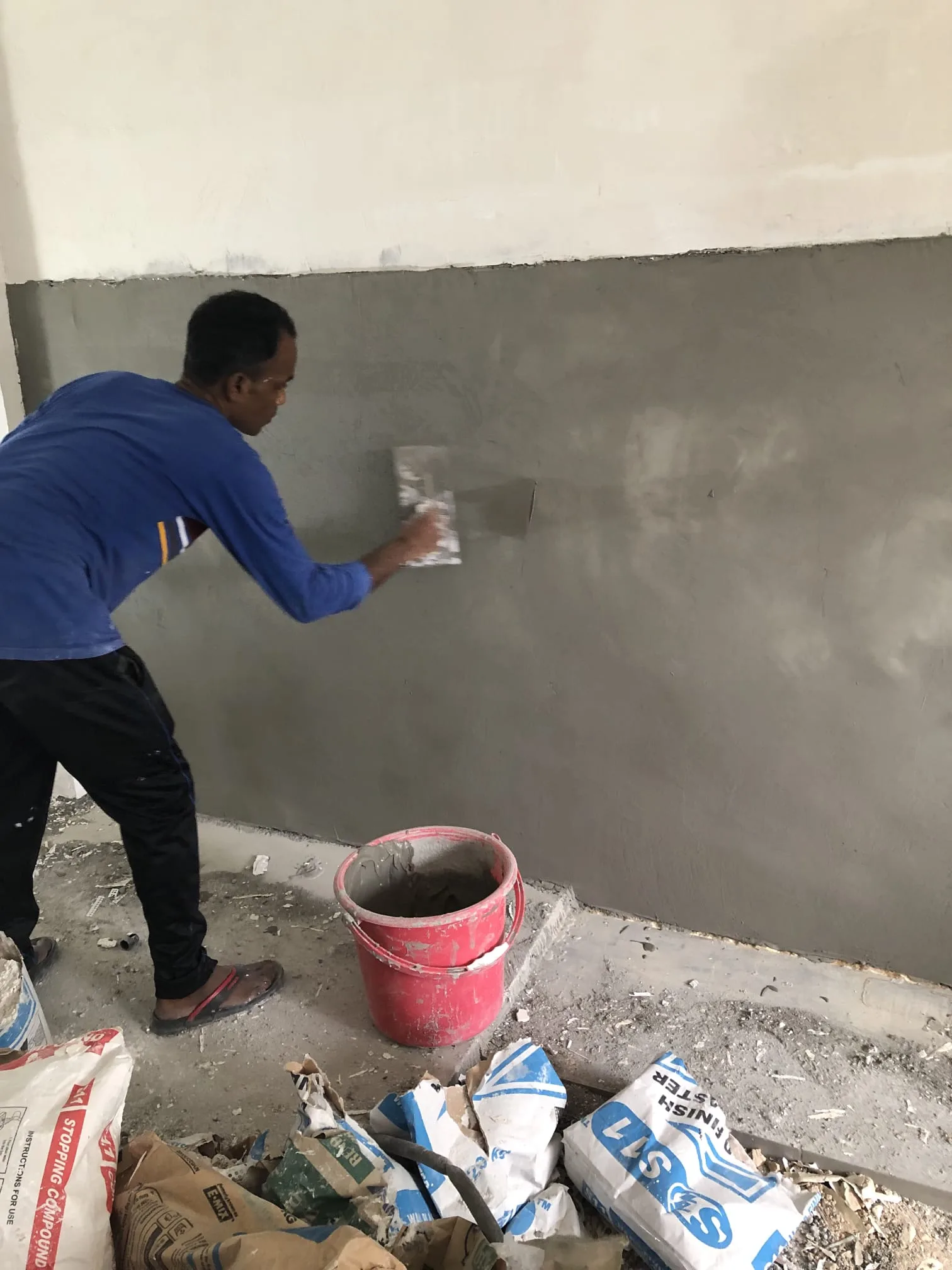
Skim coating applies a thin, even layer of plaster over the whole wall rather than just the damaged spots. It hides old patches, rough textures, roller marks from past paint jobs and uneven surfaces. This is often the best preparation before repainting an older flat, because the walls end up looking fresh and consistent. Skim coating is also useful when wallpaper has been removed and left the surface damaged. Once dry and sanded, the wall is ready for sealer and paint.
New power points, relocated pipes, removed cabinets and old fixtures all leave damaged walls behind. Chases cut for wiring or pipes need to be filled firmly so they do not crack later, and edges need to be squared off neatly. We patch, level and sand these areas so they disappear once painted. Because our electricians, plumbers and painters are on the same team, the making good can be planned as part of the job instead of left for later. You end up with walls that look as if the work was never done.
From damaged wall to a paint-ready surface
Send close-up and wider photos of the cracks or damaged areas on WhatsApp. Let us know when the damage appeared and whether it has changed.
We check the cause of the damage, whether movement, moisture or old plaster, and agree the right repair. You receive a clear quote before work begins.
The area is protected, loose and damaged plaster is removed, and the wall is filled and levelled in layers. A skim coat is applied where the whole surface needs it.
Repairs are sanded smooth and checked for flatness, and dust is cleaned away. The wall is left ready for paint, or our painters finish it in the same booking.
Straight answers from our team. Still unsure? WhatsApp us.
Most hairline cracks are cosmetic and caused by small movements or old plaster drying out. Cracks that are wide, growing, diagonal or appearing in several places should be checked. We will look at the pattern and tell you honestly if we think it needs a professional structural assessment. If it is cosmetic, we can repair it so it is far less likely to return.
A skim coat is a thin layer of plaster applied over the whole wall. It smooths rough, patched or uneven surfaces and hides old repairs before painting. It is often used in older flats or after wallpaper removal. Once dry and sanded, the wall gives a much cleaner paint finish.
Filler alone often fails on cracks that move slightly with temperature changes or building movement. When the wall moves, rigid filler splits along the same line. We cut out the crack, reinforce it with mesh tape and use flexible filler built up in layers. This gives a much longer-lasting repair.
Bubbling or flaking plaster usually means moisture behind the wall. Common causes are a leaking pipe, failed waterproofing in a nearby bathroom or water seeping in from outside. We find and fix the source first, then remove the damaged plaster and let the wall dry. Replastering without fixing the cause would only cover the problem for a while.
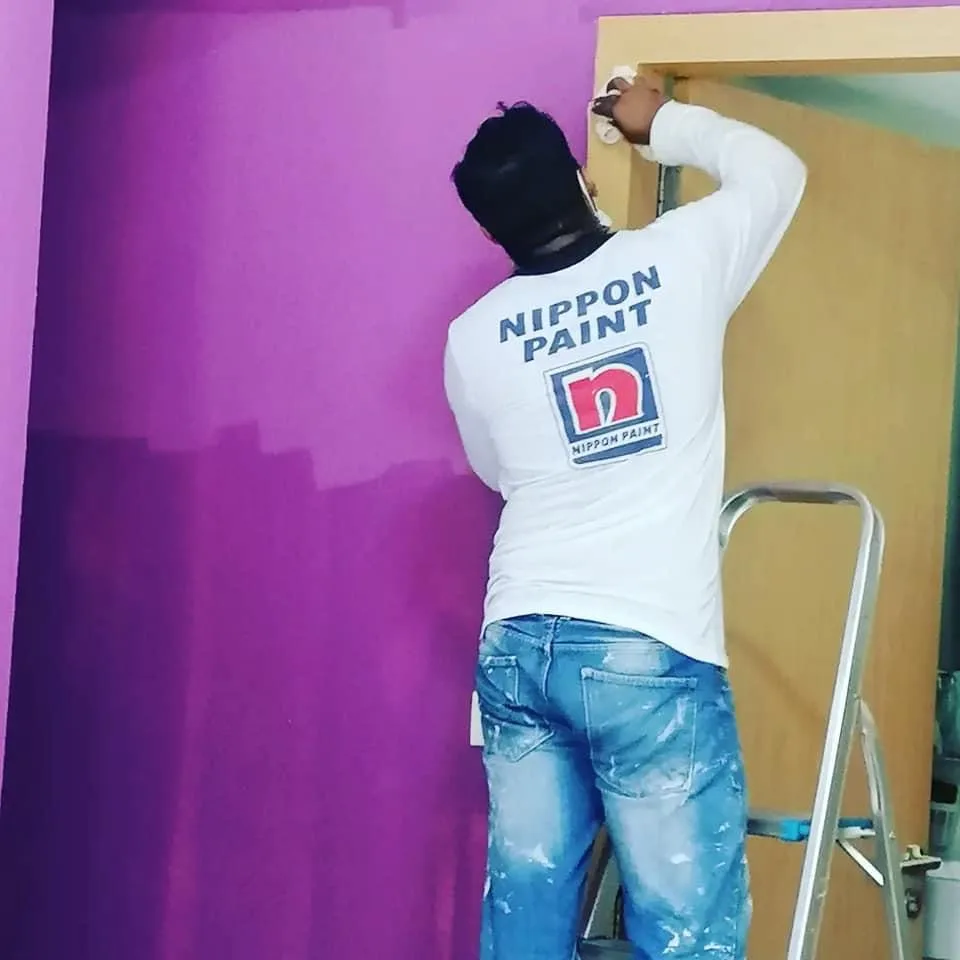
Yes. Our painters are on the same team and can follow straight after the plaster is ready. That means you get a finished wall in one booking, without arranging a separate contractor. We can also repaint the whole room so the repaired area matches perfectly.
Thin repairs and skim coats can usually be painted within a day or two. Thicker plaster and new walls need longer to dry, as painting too early can cause bubbling or patchy colour. Humidity also affects drying time. We advise you on the right timing based on the job.
Send photos on WhatsApp and we will reply with the right repair.
Tell us about the wall repair. You can also send photos on WhatsApp after you submit.
Real photos from MK Renovation jobs. Tap any photo to view it full size.