Cart
Your cart is empty
Add products to get started
Cement sand screeding and self-levelling compound for HDB flats, condos, landed homes and commercial spaces. A flat, solid and level base before tiles, vinyl, laminate or epoxy.
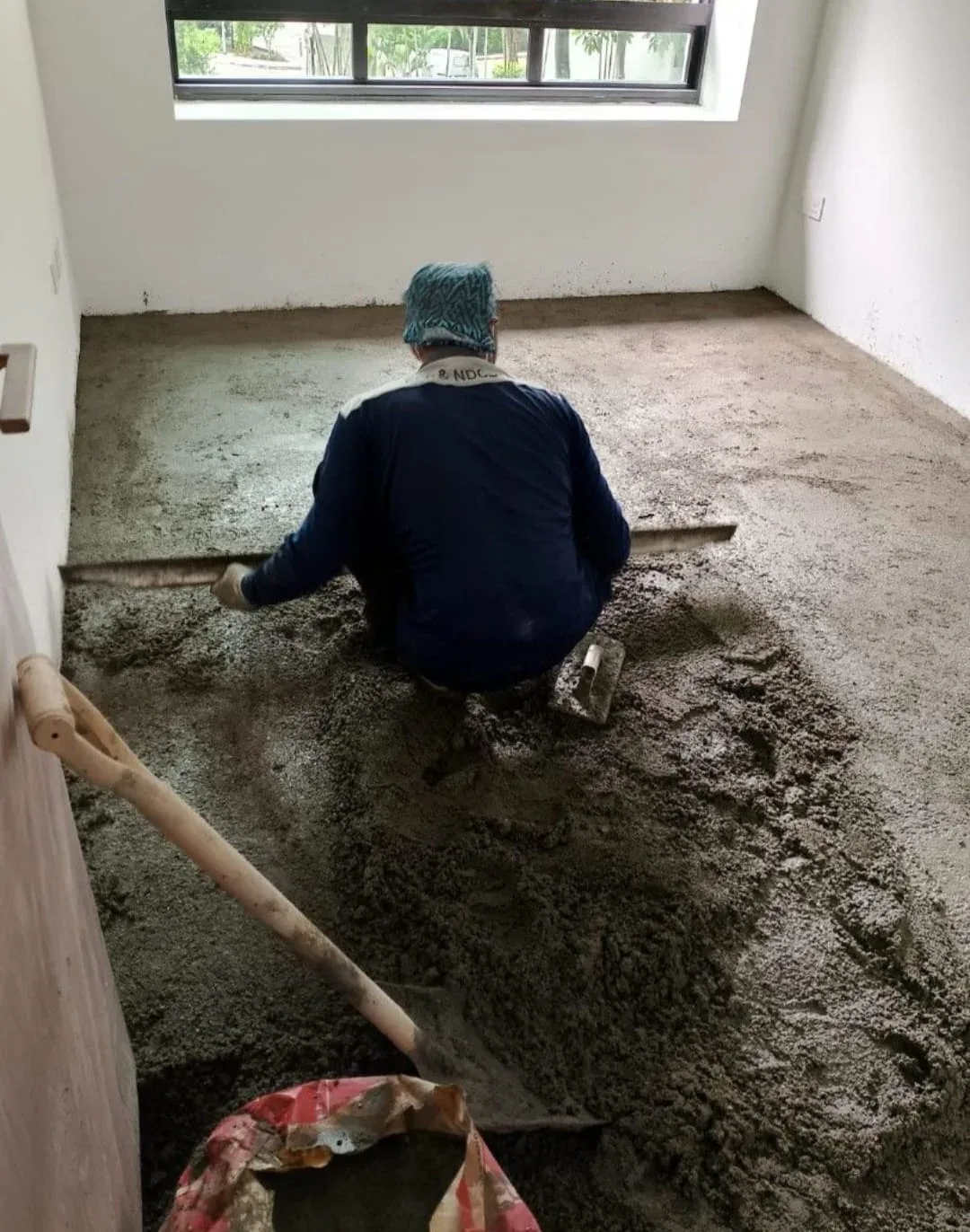
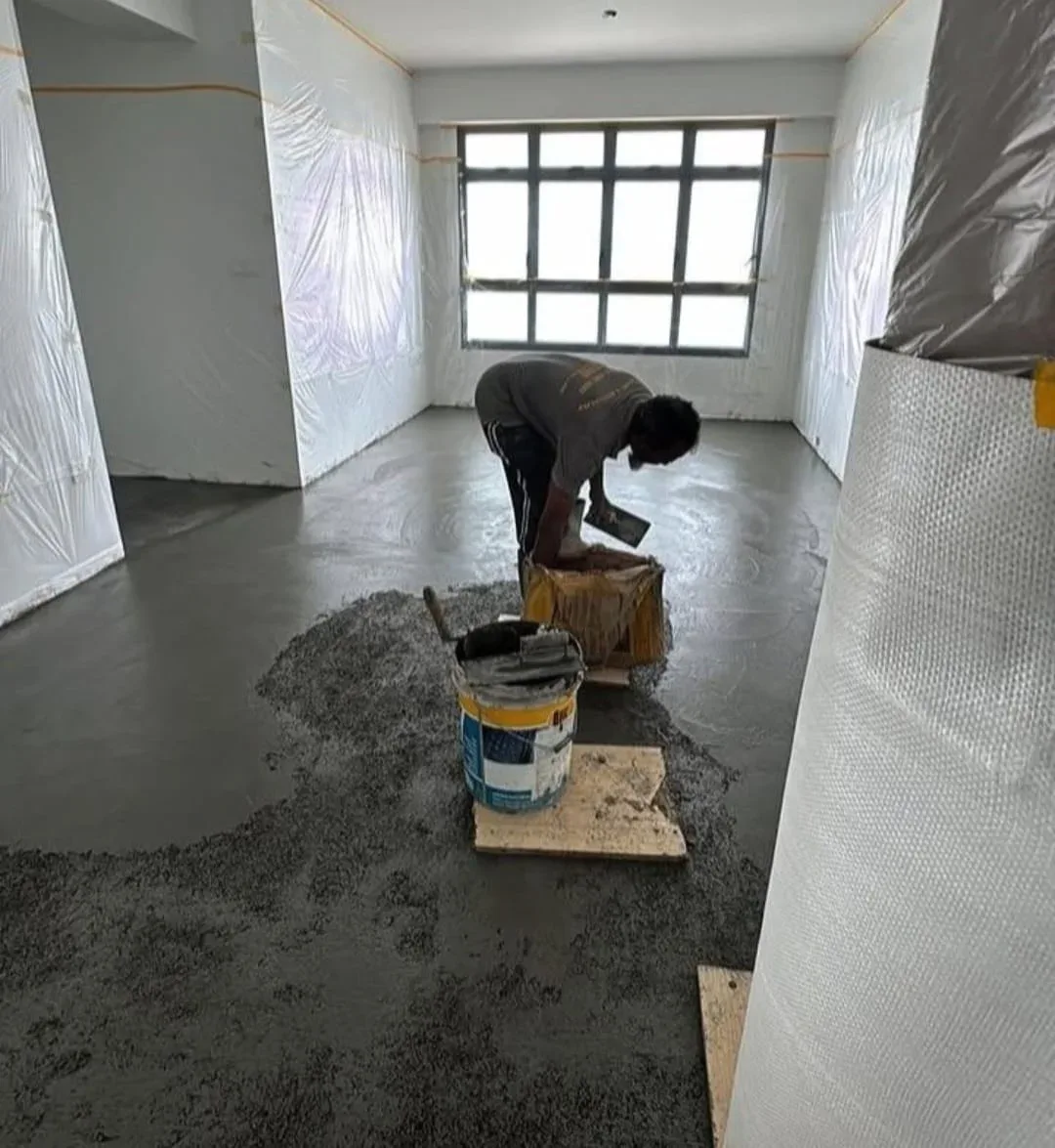
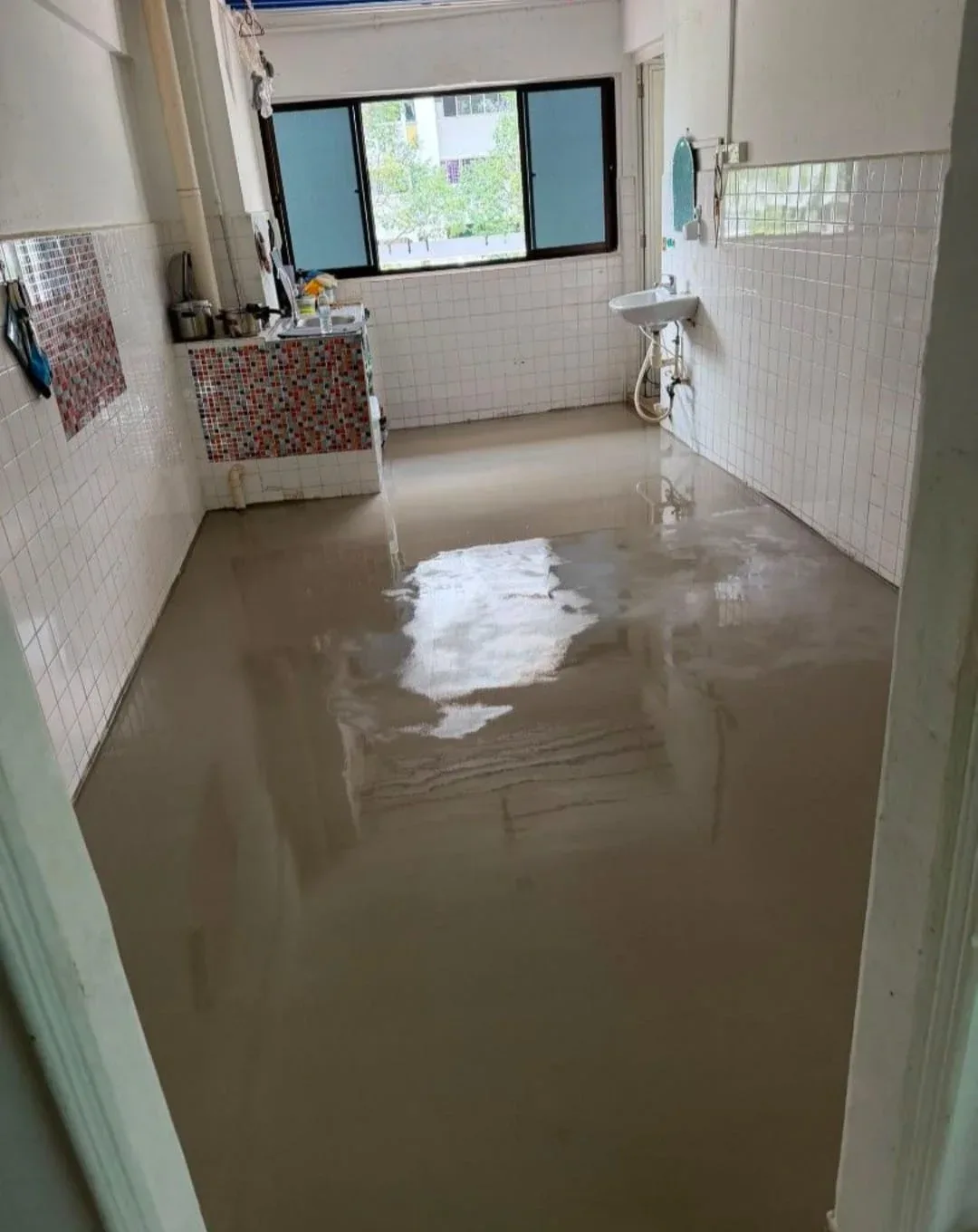
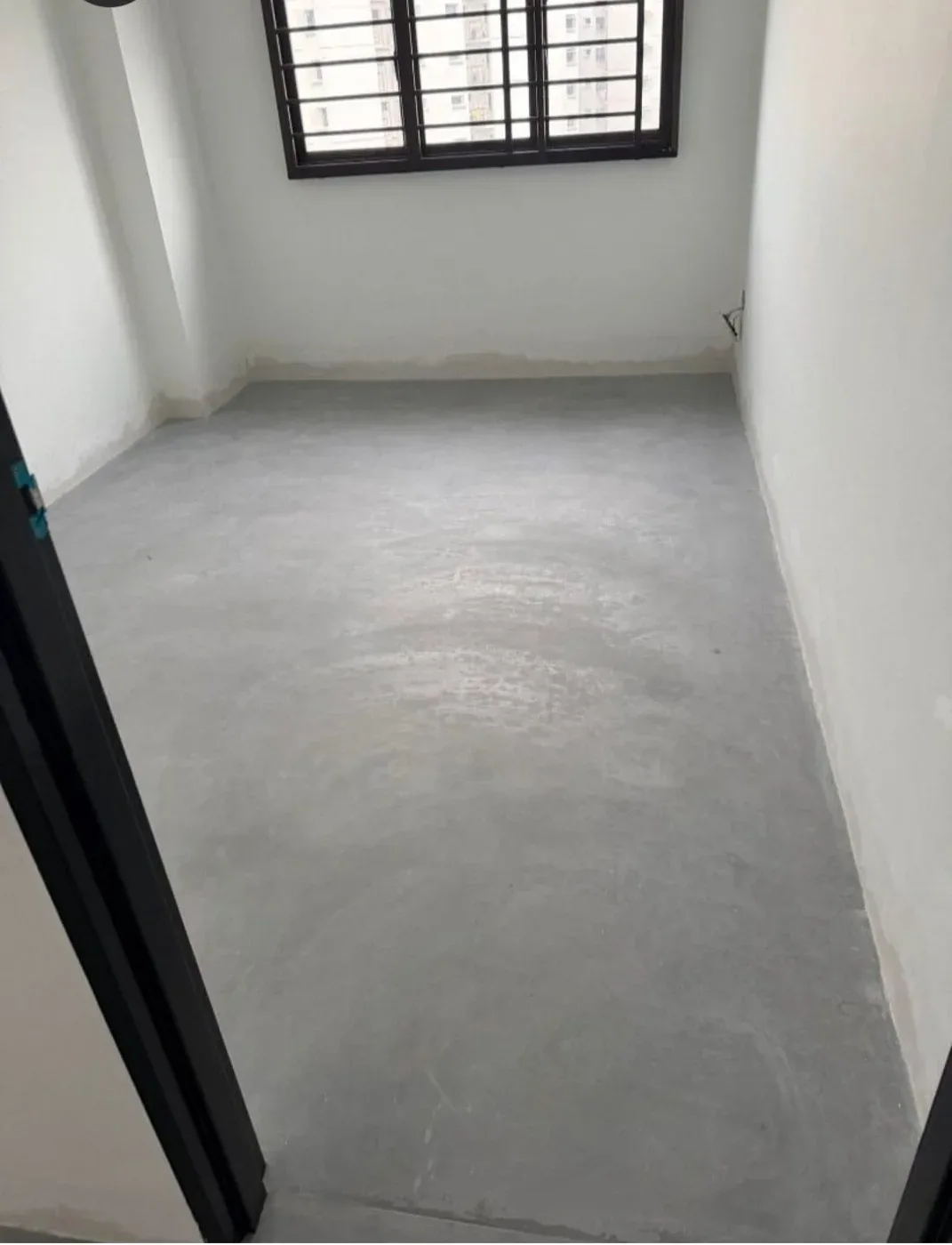
Every good floor starts with a good base. Tiles, vinyl, SPC, laminate, timber and epoxy all need a floor that is flat, solid and at the right height. If the base is uneven, cracked or hollow, the problems show up later as hollow tiles, gaps under vinyl planks, cracked joints and water that does not drain. MK Renovation lays cement sand screed and self-levelling compound across Singapore for HDB flats, condominiums, landed homes, offices, shops and light industrial units. We handle new screeds after hacking, re-screeding of old uneven floors and thin self-levelling layers over existing concrete. Cement screeding uses a mix of cement, sand and water laid over the slab and levelled by hand with screed rails and straight edges. It is ideal for building up floor height, matching levels between rooms and creating the right fall towards floor traps in bathrooms, kitchens, yards and balconies. Self-levelling compound is a flowing cement-based mix that spreads out and finds its own level. It gives a very flat, smooth surface in a short time and is the preferred base for vinyl, SPC and laminate flooring, thin tiles and epoxy coatings. We check the slab, measure levels across the whole area and agree the finished floor height with you before we start, so doors, cabinets and the next flooring layer all fit properly.
Tap any item to request a quote for it
Cement sand screeding
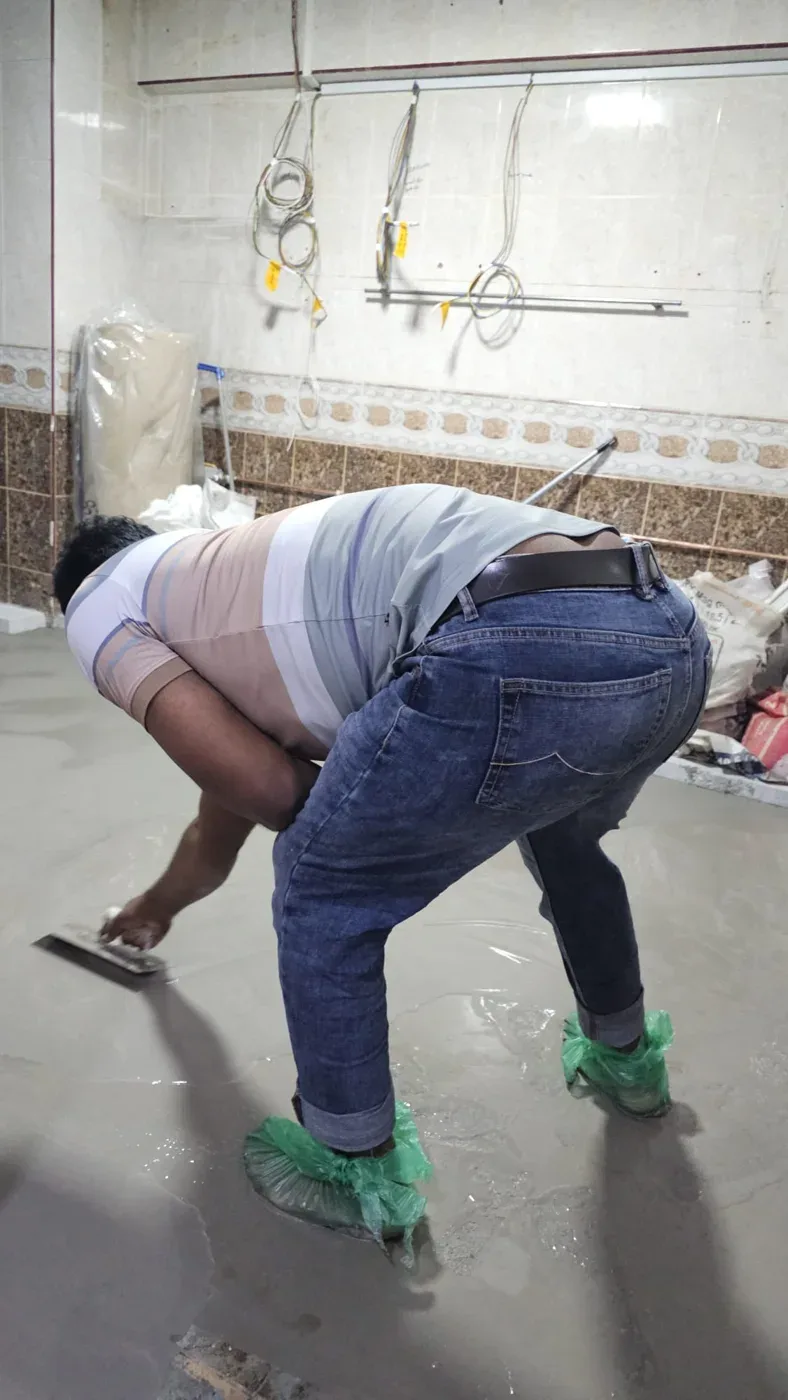
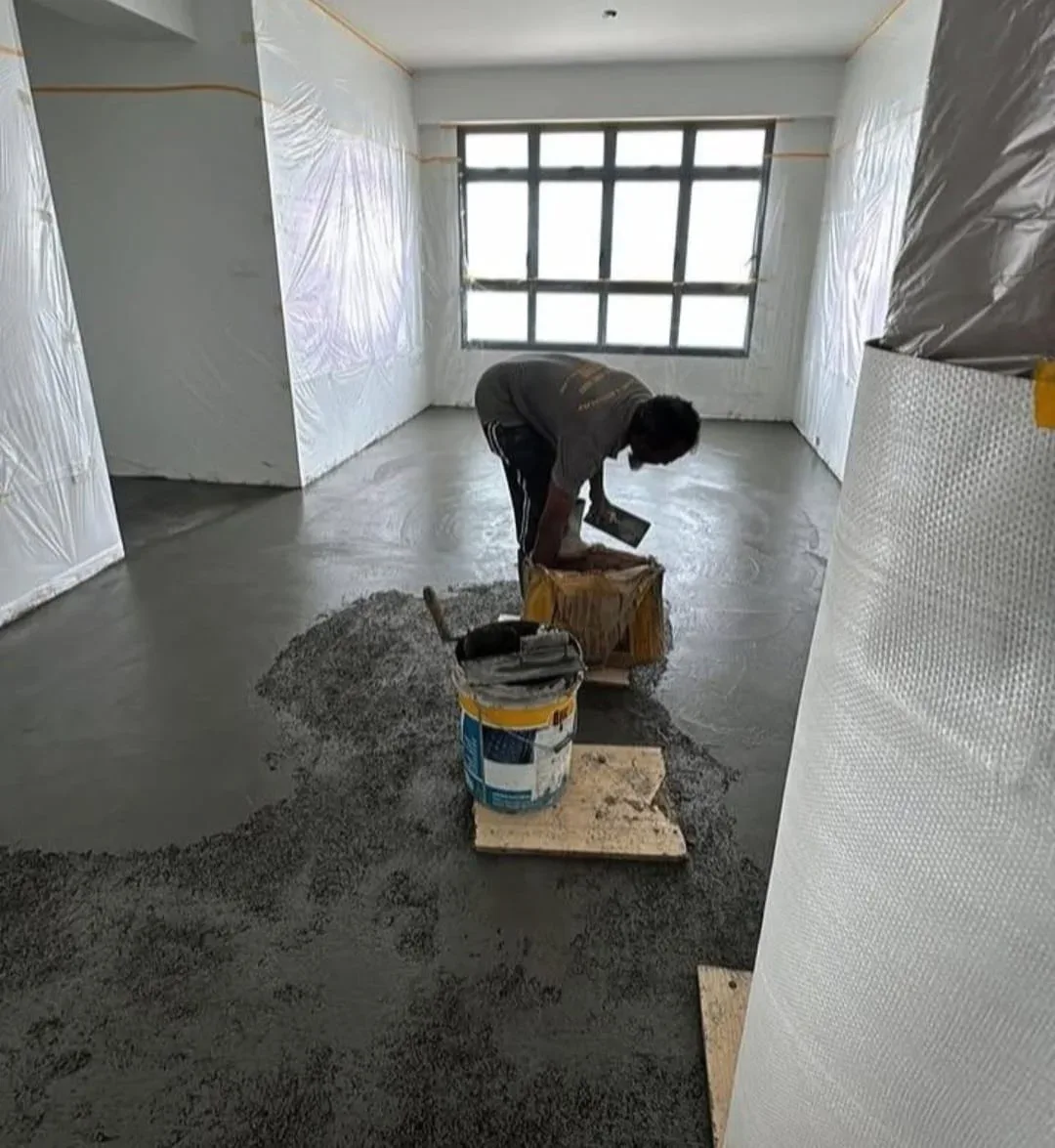
Hand-laid cement sand screed over the slab, compacted and levelled with screed rails for a solid, even base.
Self-levelling compound
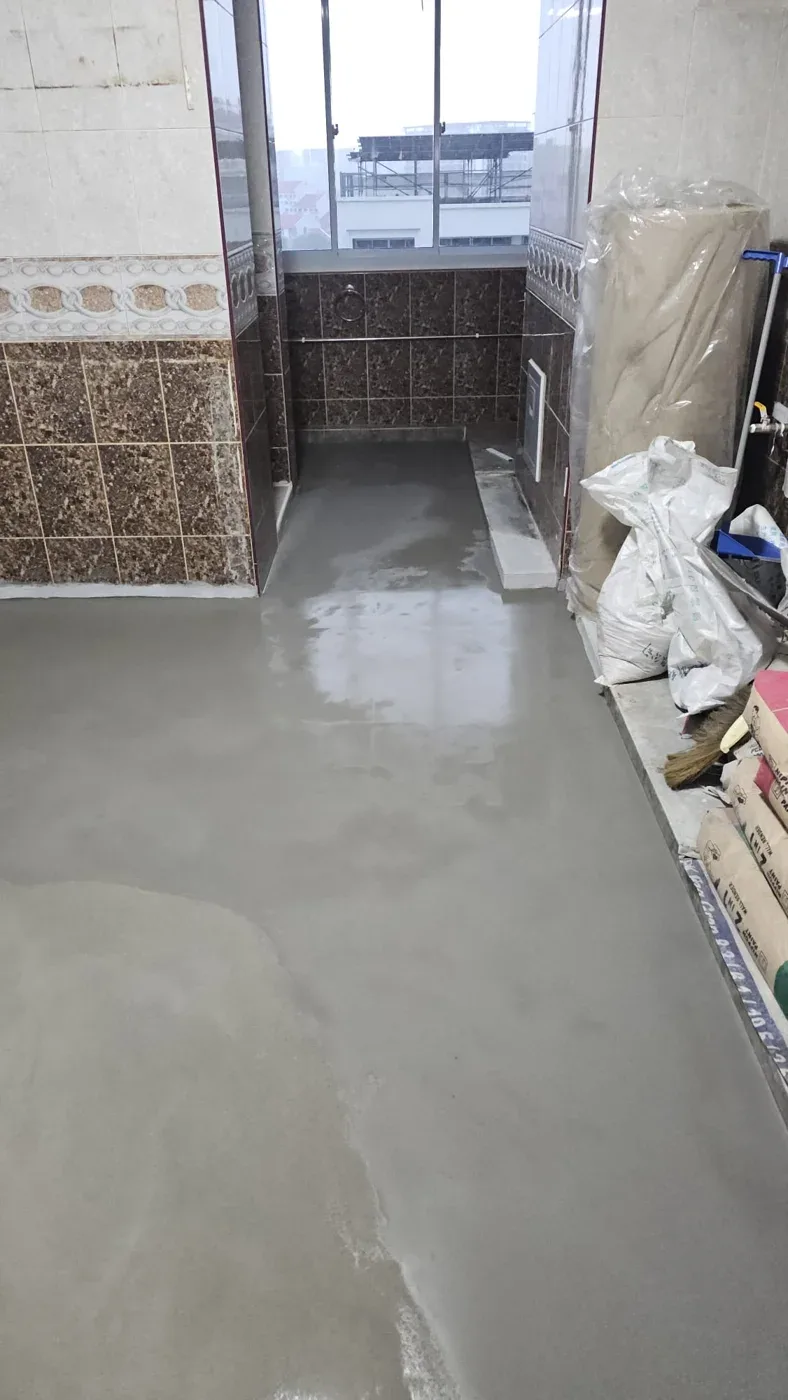
Flowing self-levelling cement for a very flat, smooth surface, ideal under vinyl, SPC, laminate and epoxy.
Floor levelling after hacking
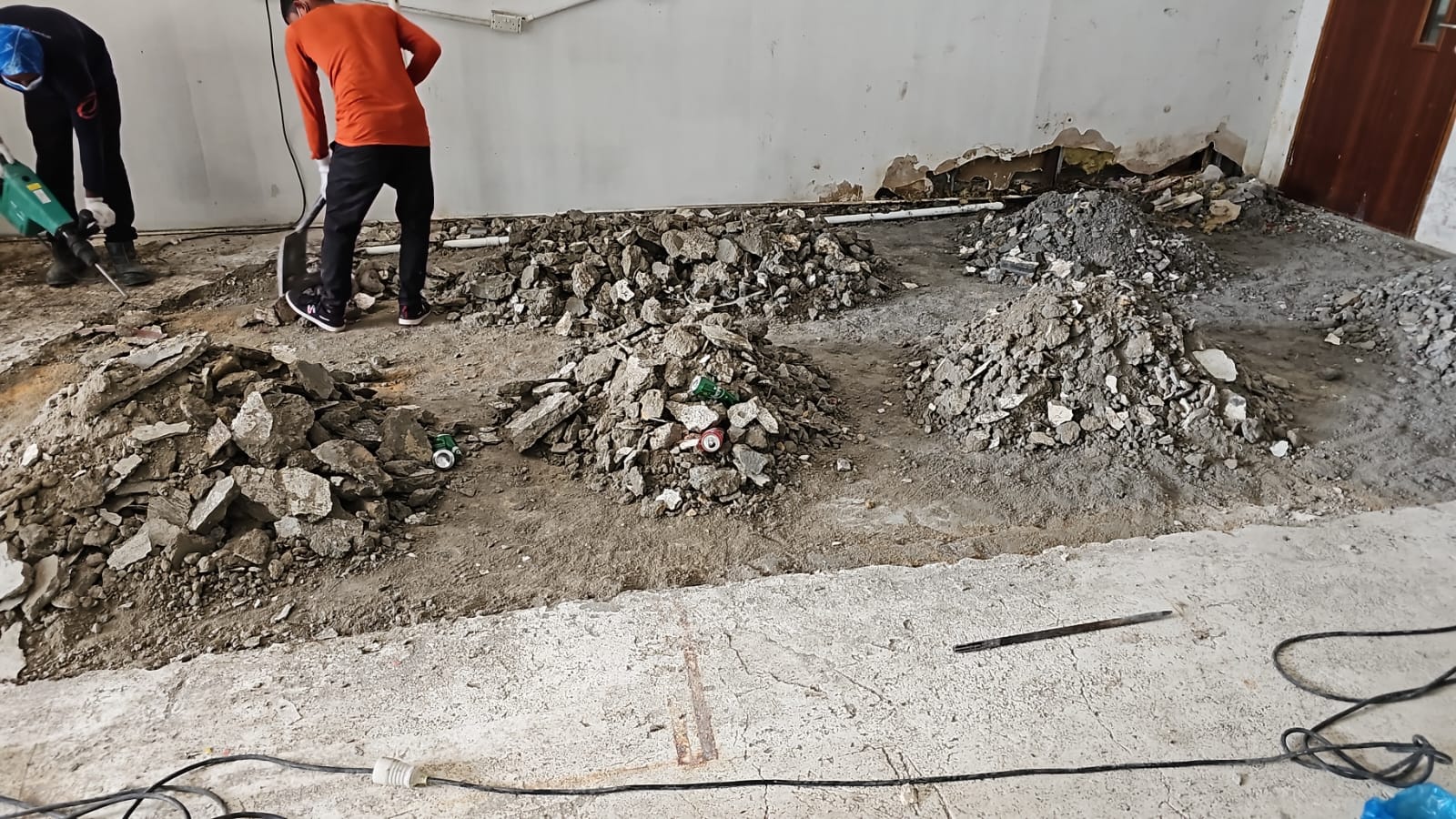
New screed laid after old tiles are hacked, bringing the floor back to the right height and level.
Falls for wet areas
Screed shaped with the correct fall to floor traps in bathrooms, kitchens, yards and balconies so water drains away.
Level matching between rooms
Floor heights matched across rooms and doorways, so transitions are flush and doors open freely.
Screed for vinyl, SPC and laminate
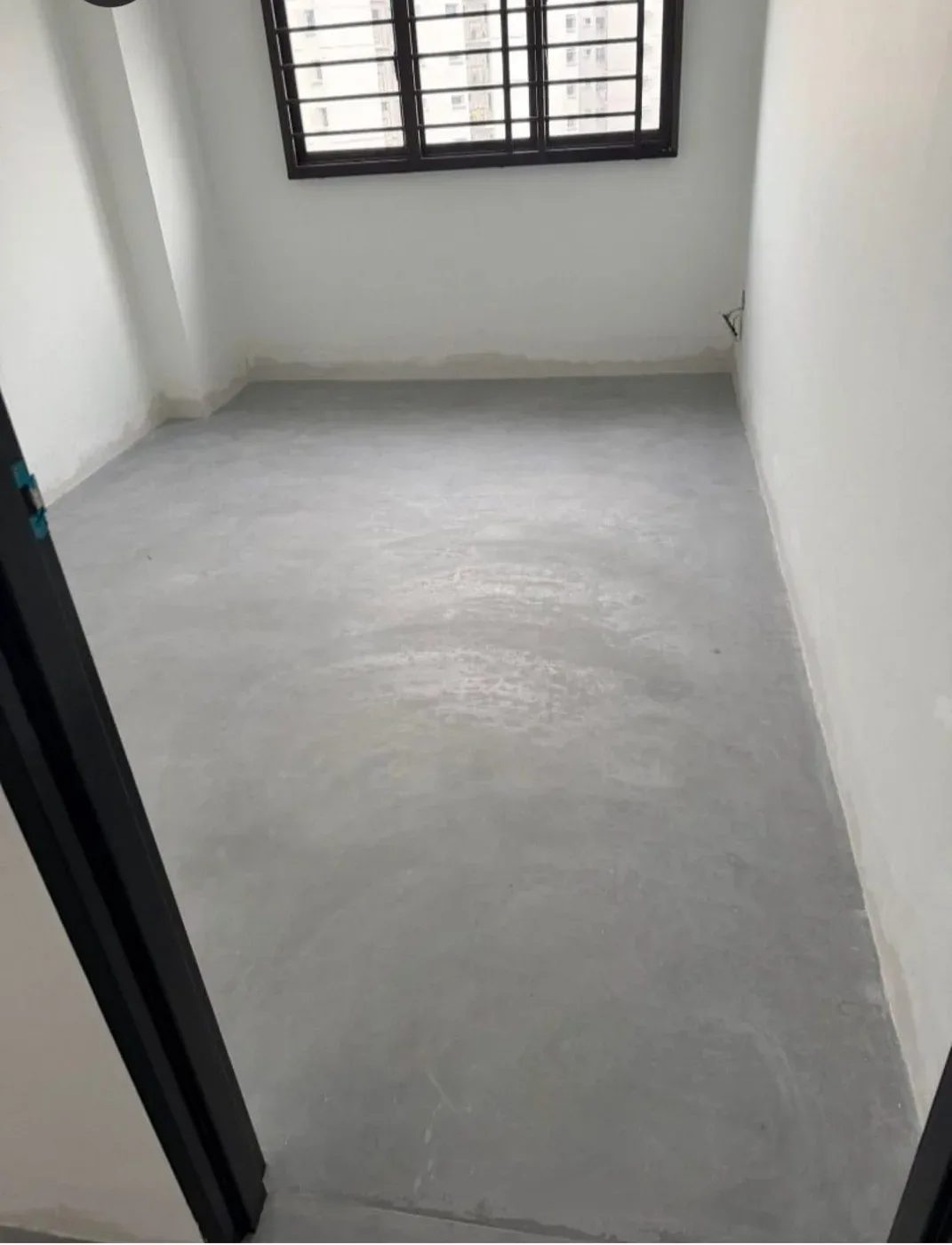
A flat, dry base that meets the flatness the flooring maker needs, so planks lie tight without gaps or bounce.
Cracked and hollow screed repair
Loose, cracked or hollow screed cut out and re-laid, so the new floor finish is not let down by the base.
Commercial and industrial screeding
Larger screed and self-levelling areas for offices, shops and warehouses, including bases for epoxy coating.
The details we check on every job
We measure levels across the whole floor and agree the finished height with you, so doors, cabinets and the next flooring all fit.
The screed mix and thickness are chosen for the job, whether it is a thick build-up after hacking or a thin self-levelling layer.
Wet areas are screeded with a proper fall to the floor trap, so water drains instead of pooling by the door.
The slab is cleaned and primed or bonded before screeding, which helps prevent hollow spots and cracking later.
The surface is finished to suit what goes on top: tiles, vinyl, SPC, laminate, timber or epoxy.
We explain how long the screed needs before foot traffic and before the final flooring is laid, and protect it while it cures.
Both methods give you a flat base, but they do different jobs. The right choice depends on how uneven the floor is, how much height needs to be built up, what flooring goes on top and how quickly the area needs to be ready. We check the slab and the levels before recommending one, or a combination of both.
Traditional cement sand screed is laid by hand over the slab, compacted and levelled with screed rails and a straight edge. It is the best choice when the floor needs to be built up, for example after hacking old tiles, or when the floor must slope towards a floor trap. It is strong, cost-effective and suitable for most tile finishes. Thicker screeds need more time to dry before the final flooring goes down.
Self-levelling compound is a flowing cement-based mix that is poured and spread, then settles into a flat, smooth surface on its own. It is used in thinner layers to correct small dips and bumps, and gives the flatness that vinyl, SPC, laminate and epoxy need. It sets quickly, so the next trade can often start sooner. It is not meant for building slopes, so wet areas with falls are usually screeded first.
Bathrooms, kitchens, yards and balconies need the floor to fall gently towards the floor trap. We shape the screed to the right gradient and check it with a level before the waterproofing and tiles are laid. Getting this right at the screed stage is what stops water pooling near doors and corners later.
Click and glue-down floors show every dip and bump in the base. Gaps, squeaks and planks that lift often come from a base that is not flat enough. We grind high spots, fill low areas and apply self-levelling where needed, so the floor meets the flatness the flooring maker asks for.
Old screeds can crack, crumble or sound hollow, especially in older flats or after water leaks. Laying new tiles or flooring on top only hides the problem for a while. We tap-test the floor, cut out the loose areas and re-lay them so the base is sound before the new finish goes on.
From the first level check to a ready base
Send photos and the floor size on WhatsApp, or book a site visit. We check the slab and measure the levels across the area.
You get a clear quote with the method, thickness and finished floor height, scheduled around your building's renovation rules.
The slab is cleaned and primed, then the screed or self-levelling compound is laid, levelled and given the right falls.
The floor is protected while it cures. We check the level again and hand over a base that is ready for the next flooring.
Straight answers from our team. Still unsure? WhatsApp us.
Cement sand screed is laid and levelled by hand, and is used to build up height or create falls. Self-levelling compound is poured in thinner layers and flows into a very flat, smooth surface. Many jobs use screed first and self-levelling on top for the final flatness.
It depends on the thickness, the product and the weather. Self-levelling compound can often take light foot traffic within a day. Thicker cement screed needs longer to dry, especially before moisture-sensitive floors like vinyl or timber. We give you the right waiting time for your job.
Yes. We grind high spots, fill low areas and apply self-levelling compound so the base meets the flatness the flooring needs. This helps stop gaps, squeaks and planks lifting.
Usually yes. After hacking, the floor is rough and lower than before. A new screed brings it back to the right height and level, and in wet areas it is the stage where the fall to the floor trap is set.
Often the cause is a screed laid without the right fall. We remove the finish in the affected area, re-screed with the correct gradient and then re-tile, with waterproofing renewed where needed.
Yes. We do screeding and self-levelling for offices, shops, clinics and warehouses, including the base for epoxy floor coatings.
Send photos of the floor on WhatsApp and we will suggest screeding or self-levelling with a quote.
Tell us about your floor. You can also send photos on WhatsApp after you submit.
Real photos from MK Renovation jobs. Tap any photo to view it full size.